


Real Estate Photographer Pro
-
 Last Updated: 06-27-2021
-
 Duration: 7.81 hour(s), 91 video(s)
-
 Size: 17.4 GB
$99
Buy More, Save More!
2 Courses
10% OFF
3 Courses
15% OFF
5 Courses
30% OFF
Why Choose TSCourses?
-
 Learn online or download via Google Drive
-
 All course files are included
-
 Free course updates via email
-
 Seen it cheaper? We'll beat the price
Course Description
If you’ve ever wondered whether you could turn a camera and a tank of gas into a 6‑figure real estate photography business, Real Estate Photographer Pro is one of the few programs designed exactly for that goal – and it’s built by someone who has already done it in the real world.
TSCourses brings this premium training to you at the cheapest price in the market, with instant access via Google Drive, high‑speed downloads, and a 15‑day satisfaction guarantee. So the real question becomes: is this the right blueprint for you?
Let’s break it down.
Who created Real Estate Photographer Pro?
Real Estate Photographer Pro was created by Eli Jones, founder of Norman & Young, a Texas‑based real estate media company that grew from a solo operation into a team and reported 7‑figure yearly revenue. Multiple independent reviewers highlight that what Eli teaches is exactly what he used to scale his own business: from pricing and systems to hiring and client management.
This is important: you’re not learning from a hobbyist or a YouTuber who has never dealt with demanding agents, tight deadlines, and scaling headaches. You’re learning from someone who has built and runs a real company that lives and dies by how well it serves realtors every day.
What’s actually inside the course?
Real Estate Photographer Pro is not just a “how to use your camera” class. It’s a full business‑in‑a‑box focused specifically on real estate photo and video work.
The course includes:
– 80+ short, easy‑to-digest video lessons
– Step‑by‑step instructions that you can literally follow like a checklist
– Real workflows from Norman & Young, not theory
– Downloadable templates, checklists, and resources
A typical path through the course looks like this:
1. Foundations and gear
You start with exactly what you need to get going – camera bodies, lenses, tripods, flash options, and software. Eli is clear about what is “must‑have” versus “nice‑to‑have,” which is a big deal if you’re trying to launch on a budget. Instead of getting lost in gear reviews, you get a tight, field‑tested kit list.
2. How to shoot real estate like a pro
The training walks you through how to shoot interiors and exteriors in a way that makes spaces look bright, spacious, and magazine‑worthy while still being realistic. Expect to learn:
– Recommended camera settings for speed and consistency
– How to handle mixed lighting (window light + tungsten)
– Composition and angles that sell space rather than just show it
– Flash vs. ambient vs. HDR – when and how to use each
– Complete capture‑to‑export walkthroughs for real homes
There are several over‑the‑shoulder sessions where you watch complete shoots, including how Eli moves through a house, which shots he always gets, and how he works fast without sacrificing quality.
3. Editing and delivery workflow
This is where many photographers stall, and where this course is unusually practical. You get:
– Lightroom and Photoshop workflows tailored to real estate
– Batch editing strategies so you’re not stuck behind a computer all night
– Presets and systems for consistency across jobs
– How to export and deliver files so agents can quickly use them in MLS listings and marketing
In other words, you don’t just learn how to make one set of photos look good – you learn how to process jobs at scale.
4. The business engine: pricing, sales, and systems
This is the heart of Real Estate Photographer Pro and what separates it from typical “creative” courses.
Eli walks you through:
– How to set simple, profitable pricing packages that agents understand
– How to structure add‑on services (video, aerials, twilight, virtual staging, floor plans)
– How to name your business, basic tax and legal considerations, and banking
– How to build a simple website using included templates
– How to pitch and close agents without being salesy
– How to get your first clients quickly and turn them into repeat clients
There are also recommendations for external vendors: virtual staging companies, editing support, and other service providers that Norman & Young actually use. Several of these partners offer discounts to students, which can offset part of the course investment once you’re up and running.
5. Scaling beyond a solo operator
If you want to grow beyond just yourself with a camera, there is training on:
– When to hire your first shooter or editor
– How to train them with the same systems you’re learning
– Scheduling, job management, and client communication
– Building a brand that agents trust enough to refer
For many students, this “scale” content is what takes them from a side‑hustle mentality to thinking like a real studio.
Community and support
Enrollment includes access to a very active private Facebook group strictly for Real Estate Photographer Pro members. Inside, you’ll find:
– Twice‑weekly live Q&A calls where Eli answers questions live
– Peer feedback on photos, pricing, website copy, and marketing strategies
– Real, unfiltered discussions about client issues, workflow bottlenecks, and growth pains
This community is arguably one of the biggest hidden values of the program. You’re not learning in isolation; you’re plugged into a network of thousands of photographers at various stages – from brand new to fully booked and hiring.
Real student feedback: what people actually say
Across public reviews and testimonials, several themes show up again and again:
– “Business clarity” – Many students say they were already decent with a camera but had no idea how to price, package, or sell. This course gave them a clear playbook instead of random tips.
– “From stuck to fully booked” – There are multiple stories of students going from zero clients to shooting several houses per day within a few months of implementation, crediting the scripts, pricing models, and marketing templates from the program.
– “Worth the investment” – Although the official list price is premium, many reviewers point out that landing even a handful of recurring clients more than pays for the cost.
– “Actionable, not fluffy” – Reviewers repeatedly highlight that lessons are practical, specific, and field‑tested. You don’t get generic “follow your passion” talk – you get emails to copy, packages to offer, and workflows to plug in.
Of course, no course is perfect. Some students mention that because the content is comprehensive, it can feel overwhelming if you try to implement everything at once. The ones who succeed fastest are those who treat it like a roadmap and work through it step‑by‑step instead of binge‑watching.
Who is Real Estate Photographer Pro ideal for?
This course is a strong fit if you are:
– A beginner photographer who wants a clear path into a highly in‑demand niche without guessing what to do next.
– A wedding/portrait photographer looking for a weekday revenue stream with more predictable hours and clients.
– A real estate agent or investor who wants to control their own media, save on marketing costs, or offer photo services within their team.
– An established real estate photographer who is busy but disorganized and wants systems, better pricing, and a way to scale.
It’s less ideal if you only
More courses you might like
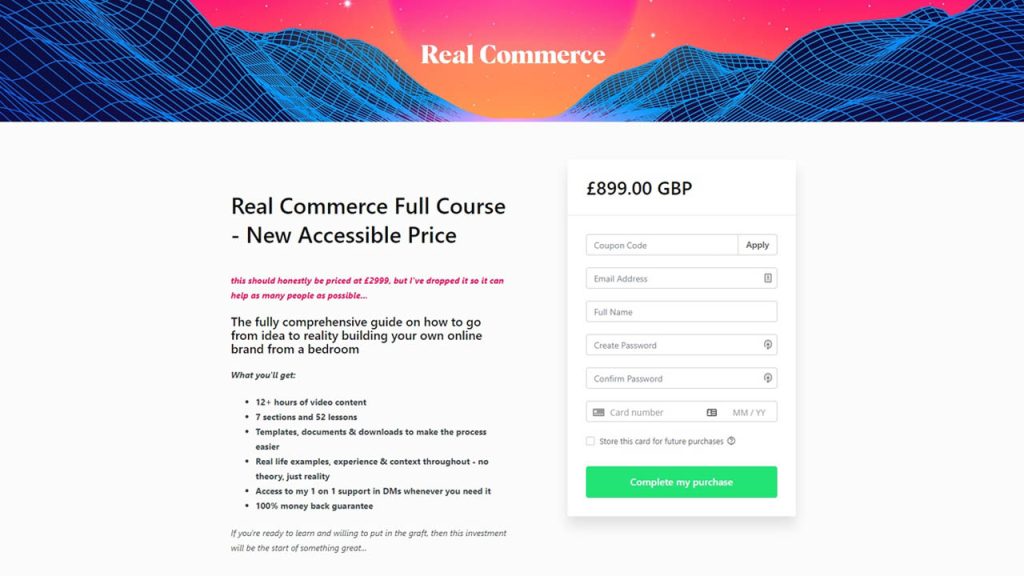
Real Commerce – Idea to Launch
Real Commerce Full Course - New Accessible Value this could actually be priced at £2999,...
Bobby Rio – The ON Formula (Advanced)
What should you may immediately get right into a assured, talkative state, the place all...

The Ultimate Guide To Performance Anxiety – Stirling Cooper
Your Easy Guide to Go From “Limp Dick” to “Pimp Dick” in simply 37 Pages...
If you are serious about turning Instagram into a real client-getting machine rather than a...